


INSIDE: Attending a fascinating Fiber Artist talk and a knitting/crochet circle, the latest in my sewing adventure, and a knitting update.
Recently my sons and I attended an artist talk at a local art gallery as part of an exhibition Residue + Response, the 5th Tamworth Textiles Triennial (a curation of works by textile artists from across Australia.)
I had the pleasure of listening to Kate Just, a feminist artist renowned for her innovative use of knitting to address pressing social issues.
As I entered the gallery, a massive length of crocheted and knitting squares, in yellow of all shades, was on display.
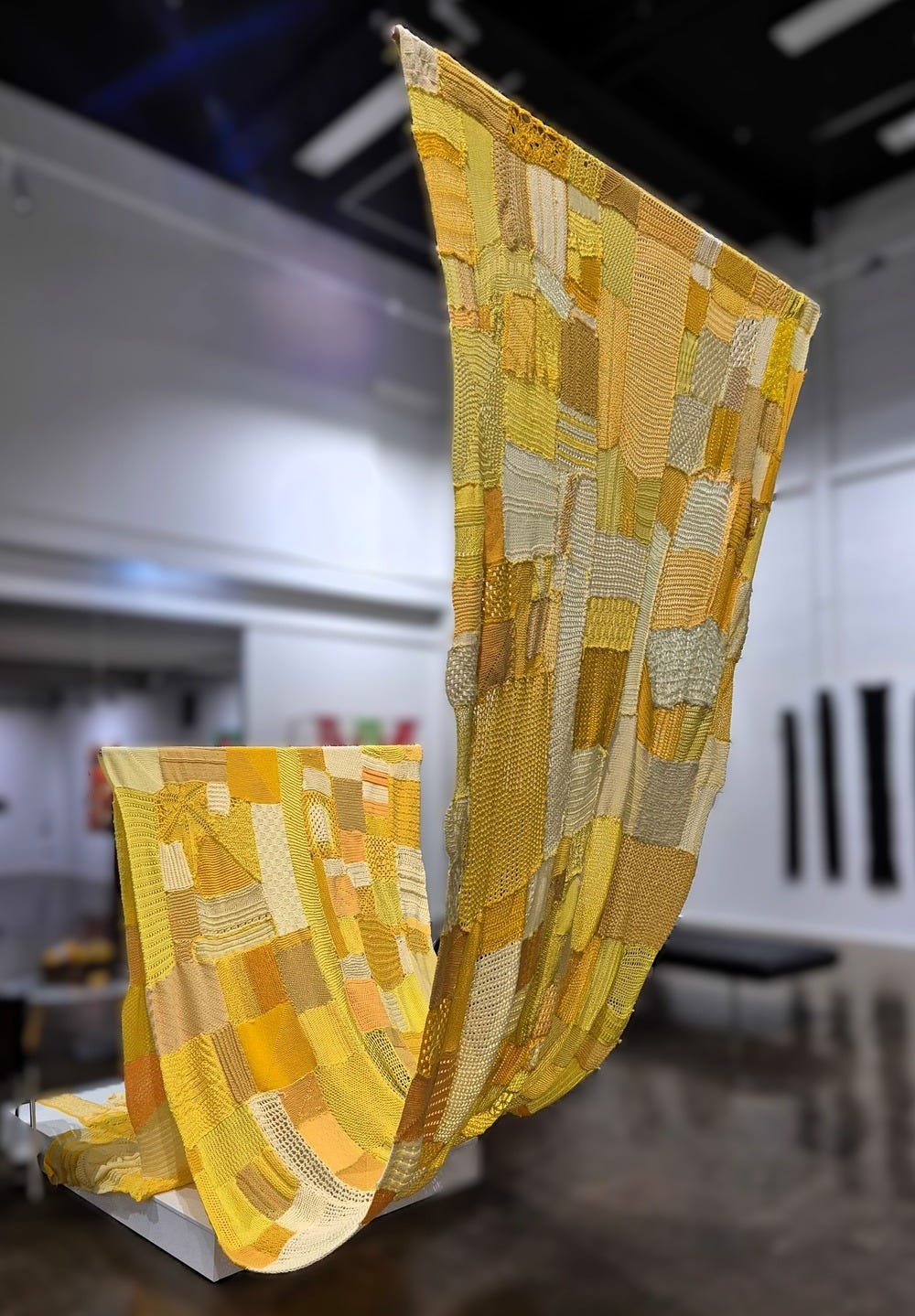
The Conversation Piece is a project where participants knit and crochet a large yellow fabric together.
“It celebrates the collective crafting textiles and invites people of all ages, and skill levels to join in. The project creates a living record of collective crafting, conversation, and learning.”
I reflected the people involved and the stories each square held.
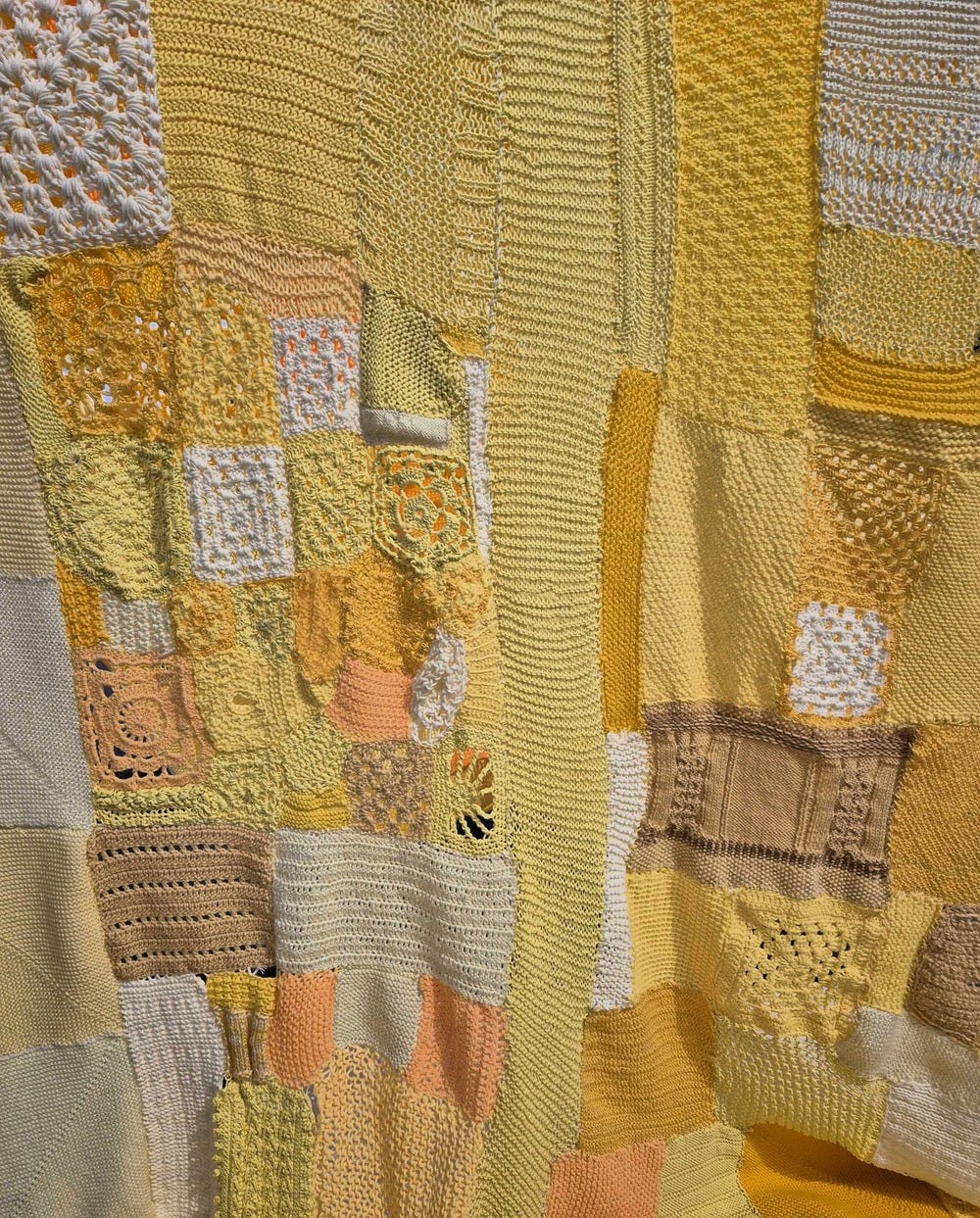
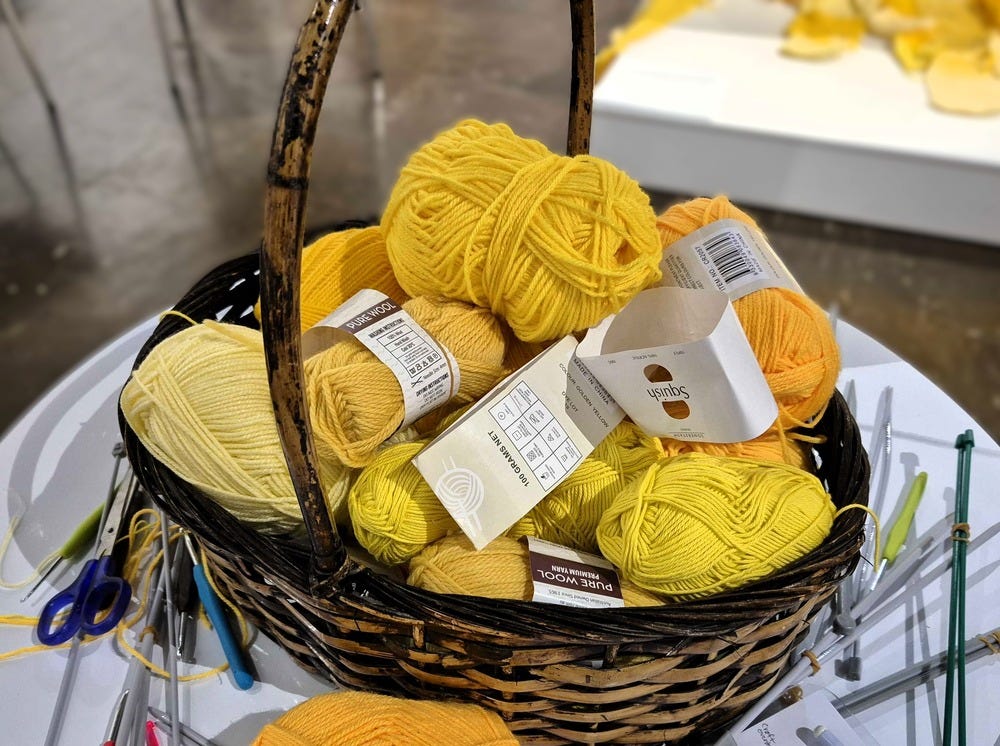
Those of us who attended the talk picked up some yellow yarn, and either knitted or crocheted our contribution while we listened to Kate.
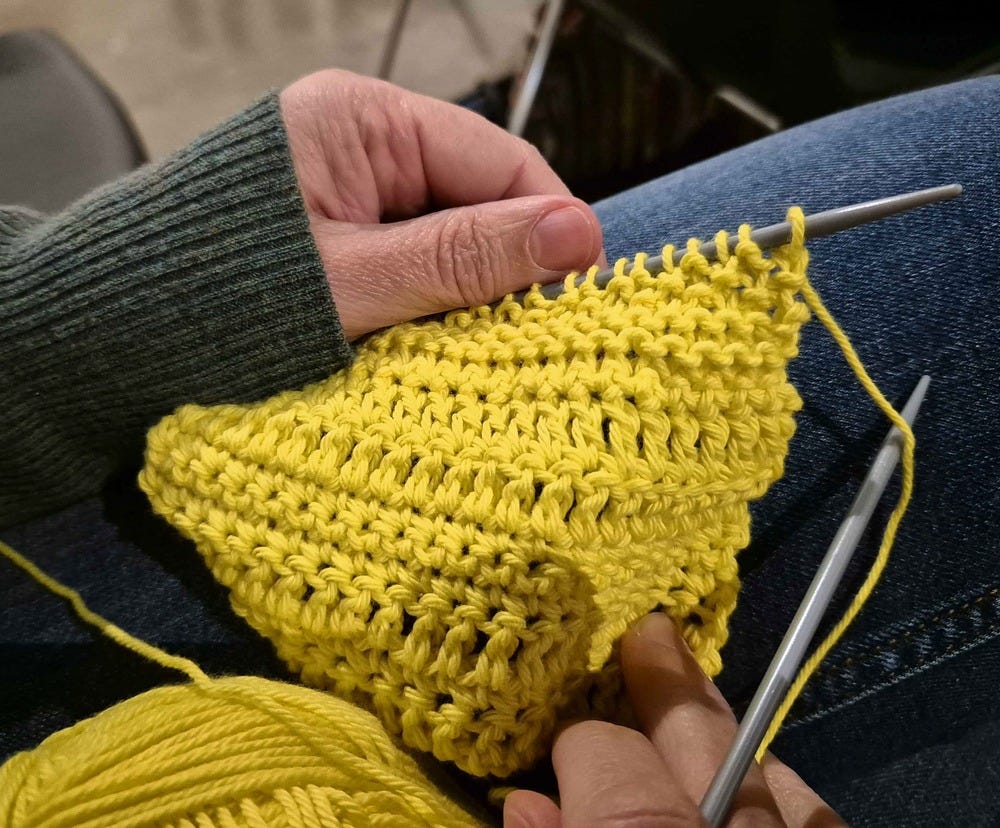
I combined crocheting and knitting with a crocheted border.
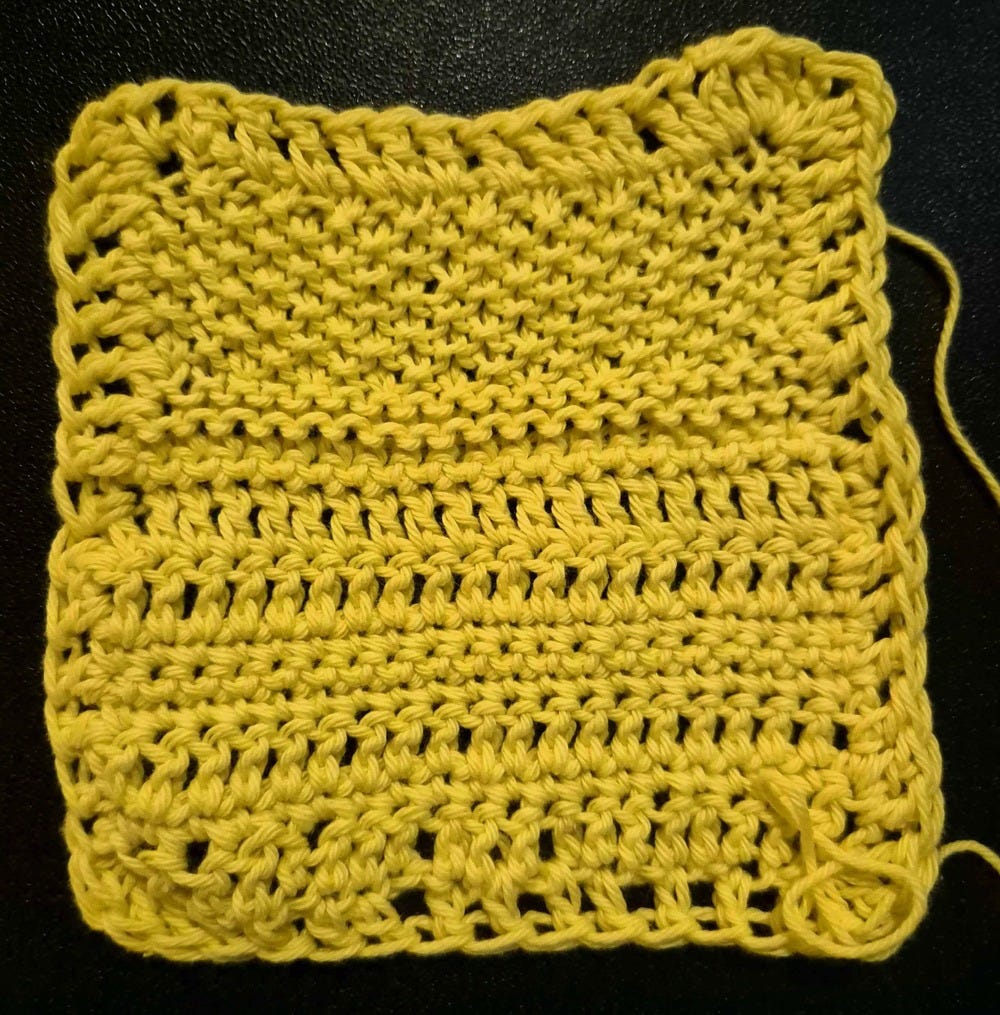
My youngest son crocheted a square of single crochet.
My eldest (typical for him) cast on far too many stitches, and attempted to do single ribbing, but realized he’d somehow done seed stitch instead. He still enjoyed it, despite only completing a small rectangle within the time.
The Conversation Piece artwork is already 12 meters long! Kate said she’s aiming for thirty, at least!
It was fascinating to learn about Kate’s creative process and the impact of the Conversation Piece.
I’ll share more about her artist’ talk next week…
My brain was buzzing with all the preparation for my Chanterelle Pants project.
I cut out the pattern pieces from what I’m terming ‘a giant sewing jigsaw puzzle.’
From this…
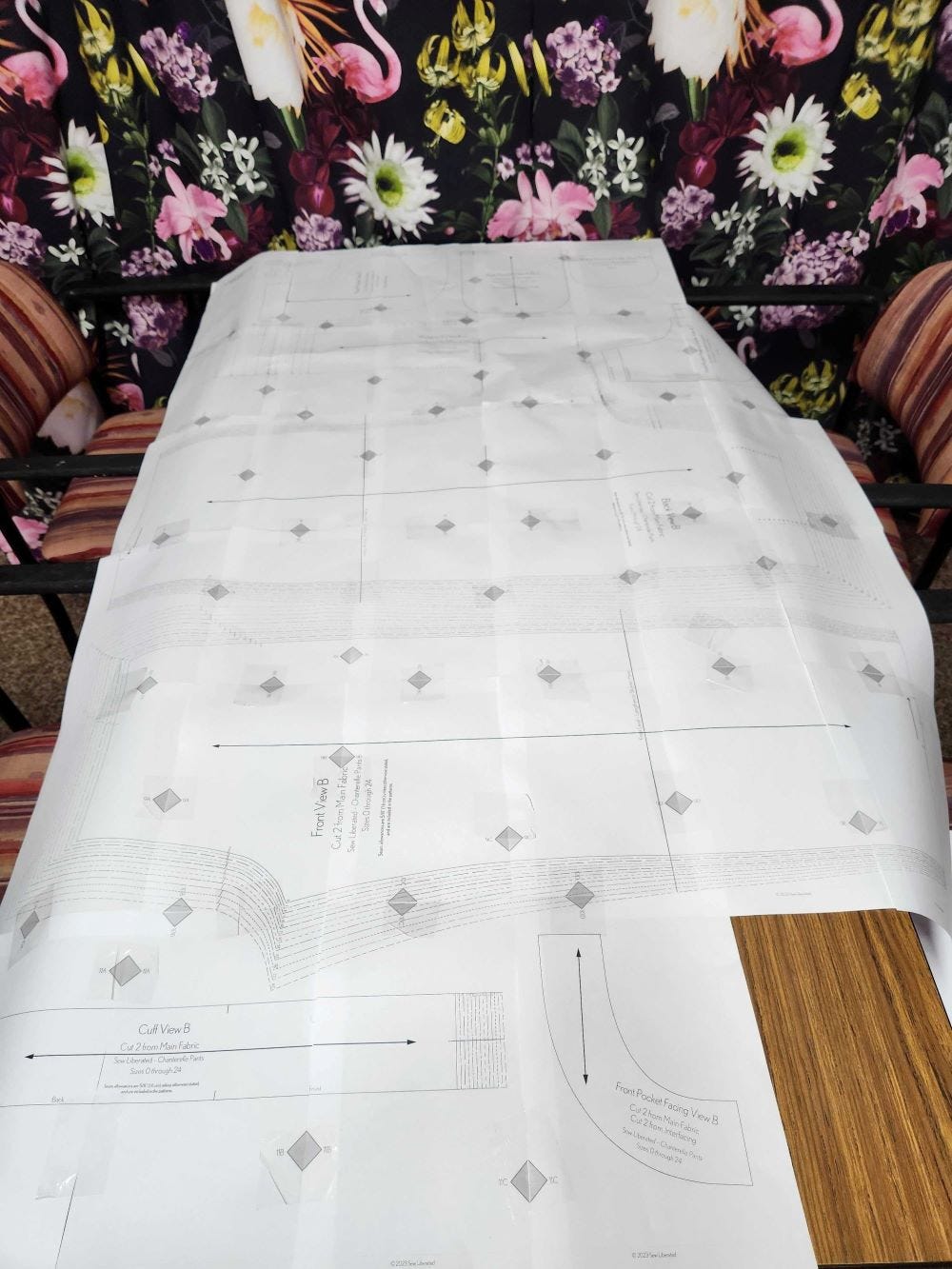
To this! It only took several hours!
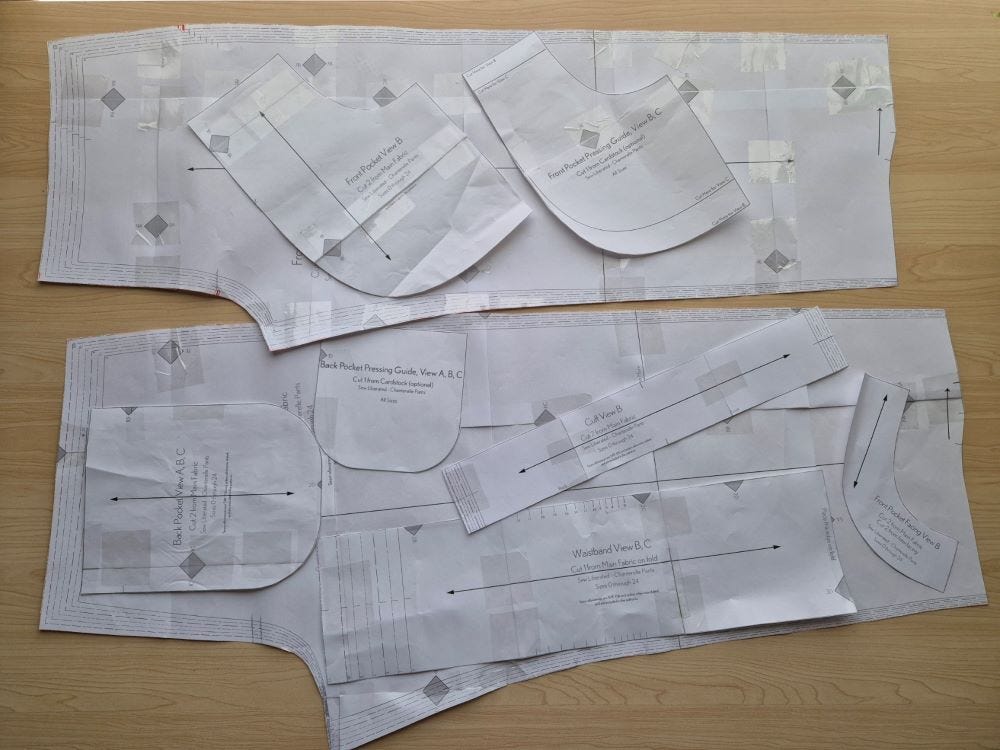
The instructions recommended tracing the pieces onto tracing paper.
I purchased my materials at a local Spotlight store: tracing paper, navy blue cotton linen, interfacing, pins, thread, and elastic.
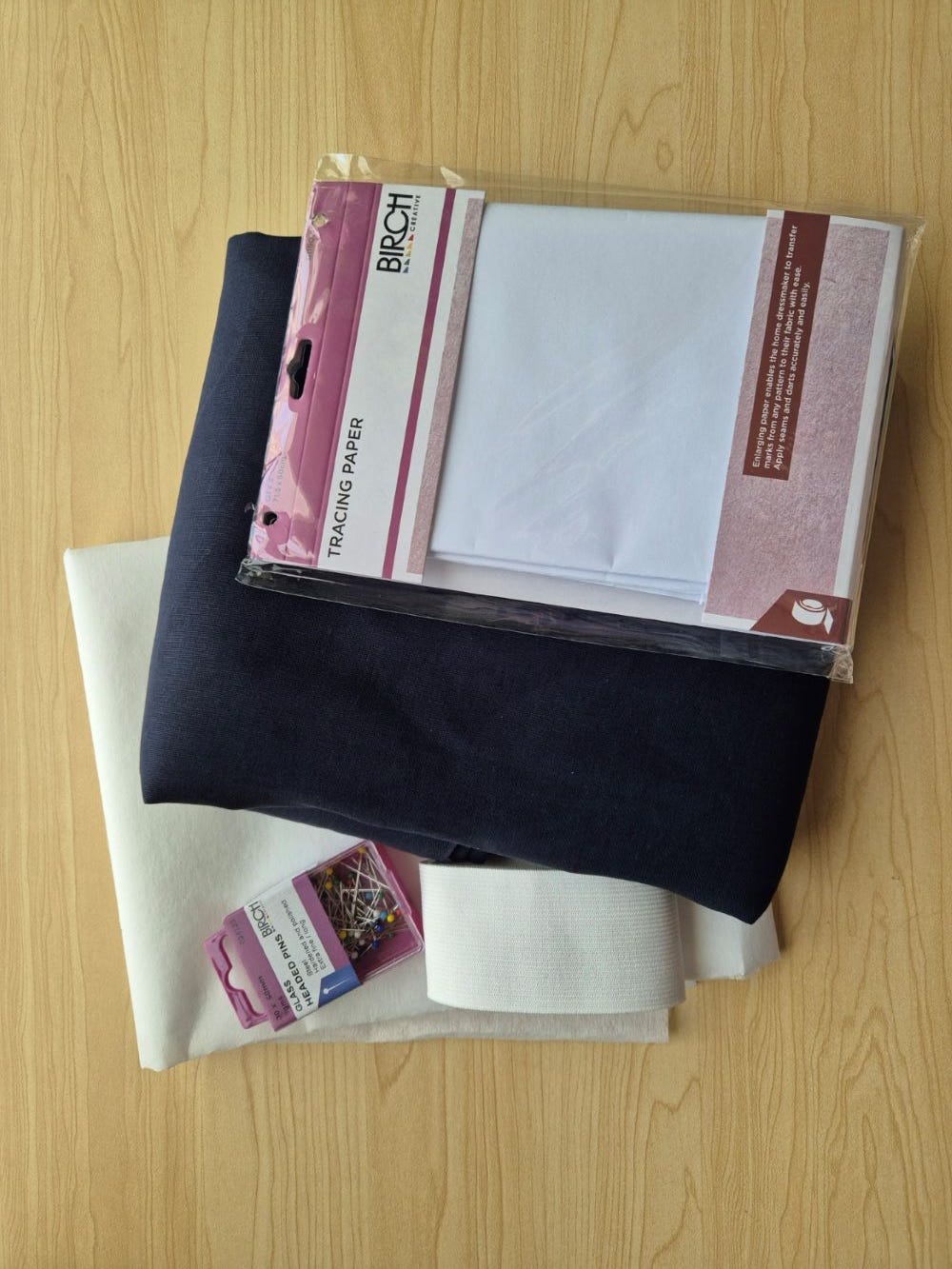
The weight of the tracing paper surprised me. In my past sewing experiences with store-bought patterns, the paper was more like tissue paper. The Birch tracing paper is a little heavier than the printing paper. I used the tracing paper for the back and front pieces. I’m leaving the rest as they are.
The material released dye during washing.
The change in the cotton/linen was significant after being washed and dried. Straight from the bolt, it was very stiff. Now it’s more flowy!
Cutting the pattern pieces out, going to the store, tracing and cutting out, washing and drying the fabric took many hours.
There’s nothing quick about this project! I’ve got a greater appreciation for what it takes to sew your own clothes!
By next Friday, I’ll have more to show you. My plan is to cut out the fabric pieces and interfacing and begin sewing. I’m excited!
On the knitting front, I finished my cloudlike cowl (the Welted Cowl design by Jane Richmond, using Aloft by Knit Picks in lace weight.) The mohair/silk fabric is incredibly soft and light. It’s hardly noticeable when I wear it.
I’m grateful natural fibers don’t irritate my skin. I imagine the fluffiness of mohair wouldn’t suit everyone.
And another question for you: If you’ve sewn your own clothing, what’s a favorite item in your wardrobe?
Press reply or leave a comment!

See you on Sunday with something to spark your curiosity and creativity…
(Disclosure: Any purchases made through links may earn me a commission.)
Before you go…
My favorite piece that I've sewn is a simple A-line floral dress with capped sleeves because it was my first dress ever, it turned out lovely, and I still enjoy wearing two decades later.
My favorite and most worn “me made” garment is a pair of black linen pants that I sewed last year. I’d wear them every day if I could